Guide / Basics
BasicsGetting started in canyoning
What the sport actually involves, what to expect on your first descent, and how to begin without scaring yourself.
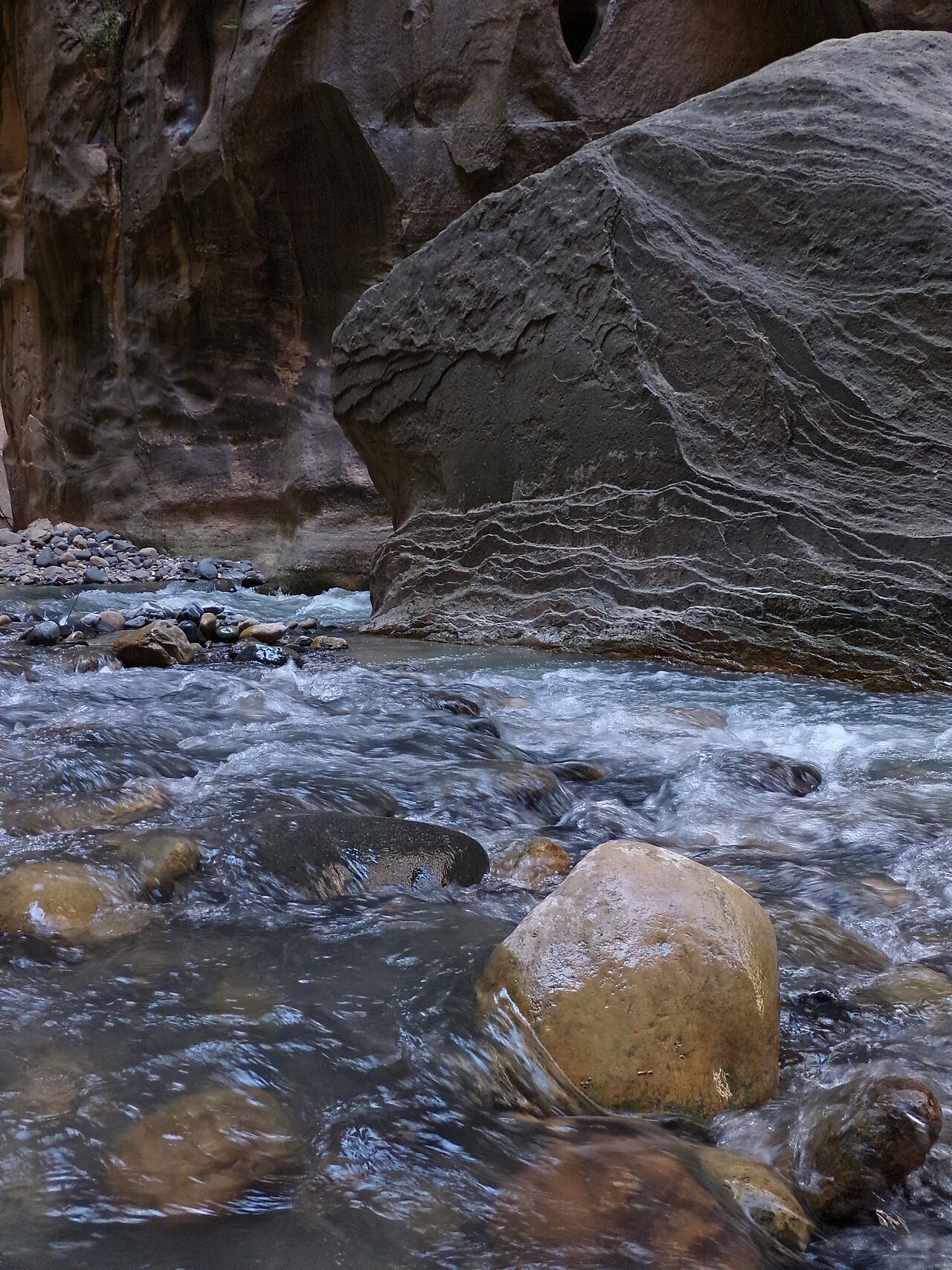
Photo: Trougnouf (Benoit Brummer) · CC BY 4.0, Wikimedia Commons
Guide / Basics
BasicsWhat the sport actually involves, what to expect on your first descent, and how to begin without scaring yourself.
Photo: Trougnouf (Benoit Brummer) · CC BY 4.0, Wikimedia Commons
Canyoning sits at the meeting point of hiking, swimming and climbing. You follow a watercourse downstream through a gorge it has carved, moving over and around whatever the rock and water put in front of you: walking, wading, swimming, sliding down polished chutes, jumping into pools and abseiling down waterfalls. No two canyons feel the same, and that variety is most of the appeal. One descent might be a sunlit corridor of warm pools you can almost wade the whole way; the next a dark, dripping slot where every metre is earned with a rope. The sport is less a single activity than a family of them, linked by the simple idea of travelling through a gorge the way water does — from the top down.
It helps to be clear about what canyoning is not. It is not white-water kayaking, where you ride the current in a boat, and it is not canyon hiking on a maintained trail high above the river. Canyoning means being in the watercourse itself, on foot and on rope, committed to a line that is usually easier to finish than to reverse. That commitment is part of what makes it absorbing, and part of why the early decisions — who you go with, which canyon, in what weather — matter more than any technique you will learn later.
A well-chosen first canyon is short, sunny and forgiving. You will spend the day in a wetsuit, often cold at first and then perfectly comfortable once you are moving. Expect a guide or an experienced friend to handle the ropes while you learn the rhythm: clip in, lean back, walk down the rock, unclip at the bottom. The jumps are optional. The swims are the best part.
What surprises most newcomers is how physical it is in a gentle way — not a sprint, but a long sequence of small efforts. You are rarely working hard at any single moment, yet a half-day descent quietly drains you: the cold, the constant small problem-solving, the high steps down wet rock. And how loud it is: in a narrow gorge, falling water drowns out conversation, so groups learn to communicate with simple, agreed signals — a raised fist for stop, a tap on the helmet for 'are you OK', a clear shout passed down the line.
There is also a particular kind of focus that catches people off guard. With your phone sealed in a dry bag and no way out but down, the ordinary background noise of the day falls away. A lot of people describe their first descent less as an adrenaline rush than as an unusual calm — a few hours where the only thing to think about is the next move, the next anchor, the next pool.
The single best decision a beginner can make is to go with someone qualified. A professional canyon guide or an established club will lend you correct equipment, choose a route matched to your level, and teach you the fundamentals in a setting where mistakes are cheap. This is not a sport to self-teach from videos. The skills that keep you alive — reading water, rigging an anchor, managing a rope you cannot see the end of — are exactly the ones that look deceptively simple on screen and turn out to have unforgiving margins in real moving water.
Be honest, too, about your own body on the day. Canyoning rewards a basic level of fitness and comfort in water far more than any gym strength. You do not need to be an athlete, but you should be able to swim a short distance in a wetsuit without panic, scramble over uneven rock, and keep going for a few hours. If you are anxious about heights or cold, say so to your guide before you start, not halfway down a waterfall — a good guide can route around almost any specific fear if they know about it in advance.
Europe is spoilt for beginner canyons. The Verdon in France and the Sierra de Guara in Spain both offer gentle, well-known routes with abundant guiding. Further afield, the Zion Narrows in Utah is a rappel-free river hike that introduces the feeling of moving through a canyon with almost no technical risk. Any of these is a fine place to discover whether the sport grabs you. It usually does.
Wherever you start, treat the first season as a deliberate apprenticeship rather than a checklist of harder and harder descents. The canyoneers who last are the ones who built a wide, comfortable base — many easy canyons, in good conditions, with people who taught them well — before they reached for anything committing. The gorge is not going anywhere. The whole pleasure of the sport is that there is always another one downstream.