Almost everything else in canyoning is a matter of skill you can build. The flash flood is different: it is the hazard that experience alone cannot defeat, because by the time you can act, it may already be too late. Understanding it is the price of admission to the sport.
Flash floods are responsible for many of canyoning's worst accidents, and they share a grim pattern: experienced parties, good equipment, a forecast that looked acceptable, and a storm that broke somewhere they were not looking. The hazard is not a lack of skill. It is the geometry of a canyon, which turns a distant rainstorm into a wall of water in the one place you cannot get out of.
Why canyons flood so fast
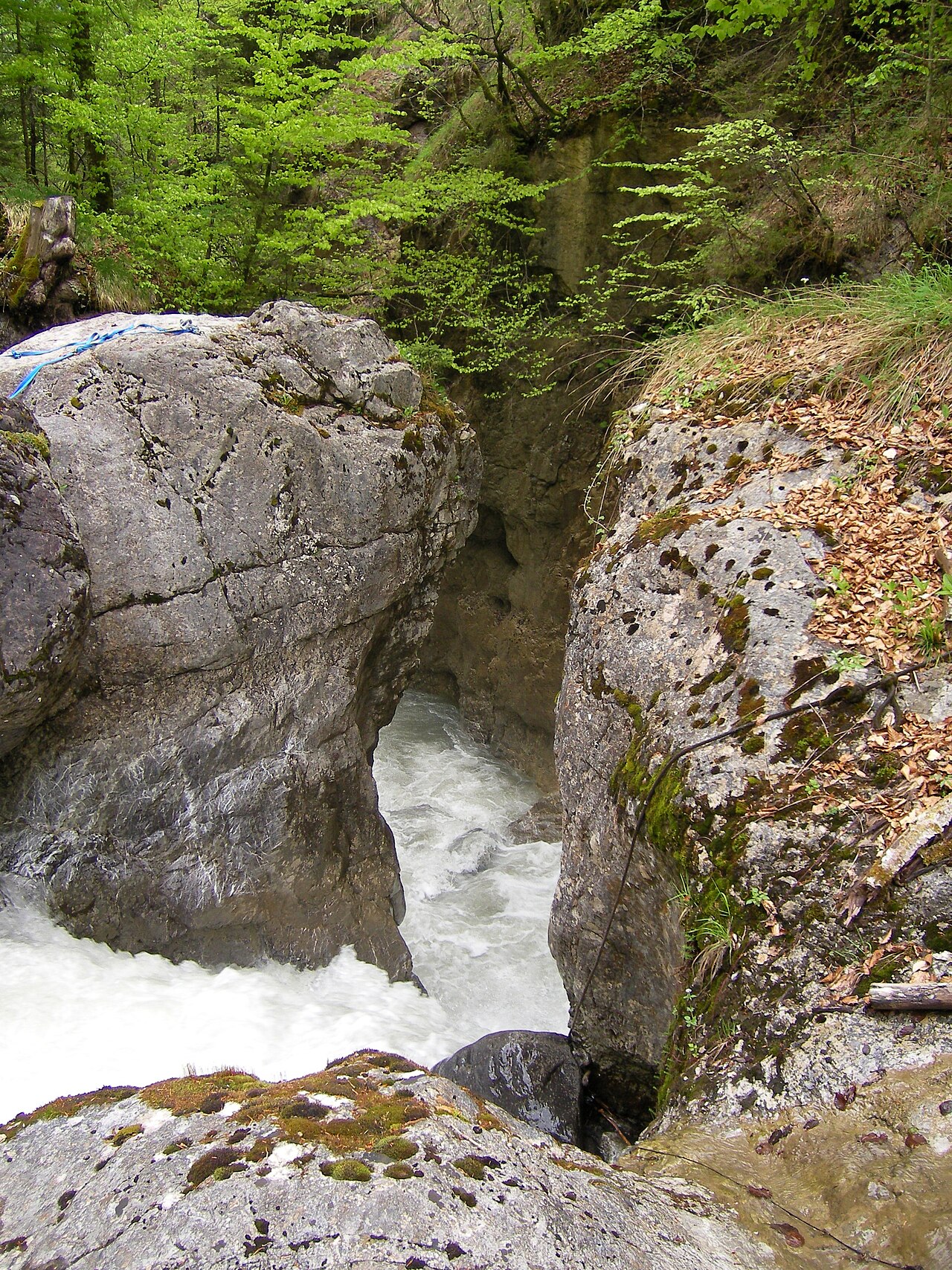
A canyon is, by definition, a funnel. Rain that falls across a wide catchment upstream is gathered into a single narrow channel — the one you are standing in. A storm you cannot see, several kilometres away, can send a wall of water down a gorge that is bone-dry where you stand. The rise can take minutes, and the narrow walls give you nowhere to go.
Two features make it worse than ordinary river flooding. First, the catchment can be enormous compared with the slot — square kilometres of mountainside draining into a channel a few metres wide, so a modest amount of rain over a large area becomes a violent amount of water in a small one. Second, hard rock and thin soil shed water almost instantly instead of soaking it up, so there is little delay between the storm and the surge. The same qualities that carved the beautiful narrows you came to see are the ones that make them deadly when it rains.
Reading the warning signs
If you are already in a canyon, learn the signals that water is rising and act on the first of them, not the third:
- The water suddenly turns brown or cloudy.
- Twigs, leaves or debris begin floating past.
- The flow rises or the current strengthens noticeably.
- A low rumble grows from upstream.
- The water level climbs against a rock you were watching.
- Floating foam or a sudden rise in noise reaches you before the water does.
Note. If you see any of these signs, get out of the watercourse immediately and climb as high as you can. Do not wait to confirm — confirmation is the flood arriving.
It is worth rehearsing what 'get high' actually means before you ever need it. As you move through a canyon, keep a running, low-level awareness of escape: a ledge above the high-water mark, a ramp on the bank, a section where the walls relax enough to scramble. You will not have time to look for safety once the water turns; you need to already know where the nearest high ground is, the way a swimmer keeps half an eye on the shore.
The discipline that prevents it
The real defence happens before you ever reach the canyon. Check the forecast for the entire upstream catchment, not just your location. Treat any unsettled or unstable weather as a reason to cancel. Know your escape points along the route. And accept the hardest part of the sport: turning back. A canyon you walked away from will still be there next week. The discipline to cancel a perfect-looking day because of a storm forty kilometres away is what separates old canyoneers from unlucky ones.
Build the habit of reading weather like a canyoneer, not a hiker. That means looking at the whole upstream basin, paying attention to convective storms that build through a hot afternoon, and respecting the truth that mountain forecasts are uncertain by nature. A blue sky overhead tells you nothing about the cloud sitting over the headwaters an hour's drive away. Many regions also post river gauges or dam-release schedules online; learn which ones cover your canyon and check them as routinely as you check the time.
Finally, treat the decision to cancel as a normal, respectable outcome rather than a failure of nerve. The most dangerous pressure in the sport is social — a group that has driven for hours, taken time off, and does not want to admit the day is off. The single most useful thing any team can agree, out loud, before they start, is that anyone can call it, no questions asked, and the rest will back them. The flood does not care how committed you were to the plan.