Guide / Ethics
EthicsRespecting the canyon environment
Gorges are fragile, living places. How to descend them without leaving a mark, and why low-impact ethics matter more every year.
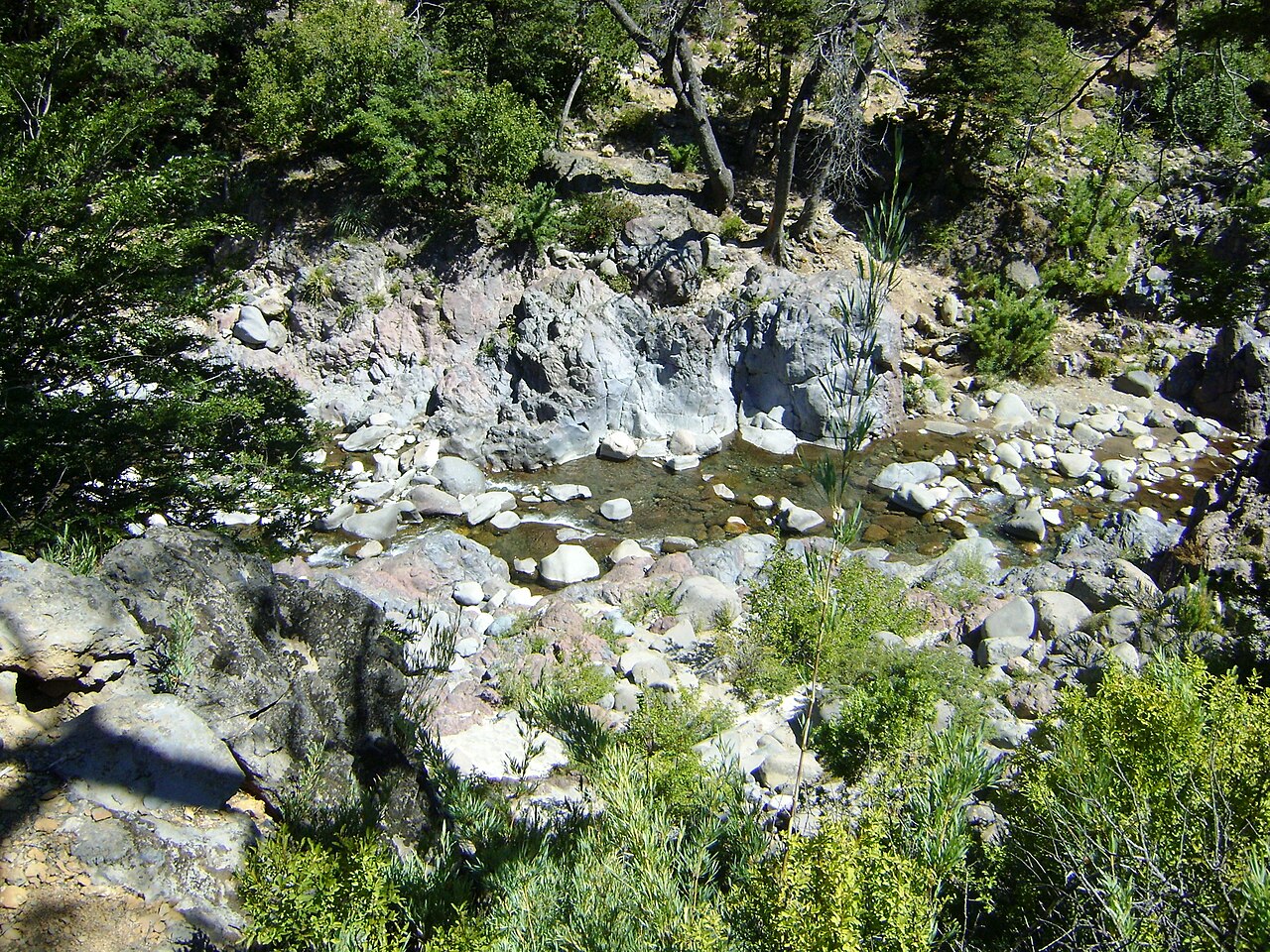
Photo: AlonsoRiveraM · CC BY-SA 4.0, Wikimedia Commons
Guide / Ethics
EthicsGorges are fragile, living places. How to descend them without leaving a mark, and why low-impact ethics matter more every year.
Photo: AlonsoRiveraM · CC BY-SA 4.0, Wikimedia Commons
A canyon is not an obstacle course. It is a living watercourse, often a refuge for species that survive nowhere else nearby, shaped over timescales that dwarf our own. As the sport grows, the gap between how we treat these places and how fragile they are has become impossible to ignore.
The cool, damp, shaded micro-climate of a deep canyon shelters specialised plants, amphibians and insects. Many of these communities are tiny and slow to recover. A single popular route, descended by thousands of people a season, concentrates impact in exactly the narrow corridor where life is most concentrated too.
Gorges are also hydrologically sensitive in ways that are easy to miss. The pools you swim through are nurseries for amphibians and fish; the gravel banks you scramble over are spawning grounds; the seeps and mossy walls support plants found in only a handful of valleys. Because a canyon funnels everything downstream, what happens in the narrows does not stay there — sunscreen, sweat, trampled banks and disturbed sediment all travel with the water to the reaches below.
Two habits matter more than the rest because they are so easy to get wrong. The first is anchors: every new bolt or sling left in a canyon is a permanent mark, so the ethic is to use and maintain what is already there rather than adding to it, and to take a long view of how a route's fixed gear accumulates over decades. The second is simply numbers — a quiet party of four leaves a fraction of the noise, erosion and disturbance of a boisterous group of twelve, and in a fragile slot that difference is the whole game.
In many regions the right to descend a canyon at all depends on a fragile balance between canyoneers, landowners and conservation authorities. A single careless season — litter, trampled crops on the approach, cars blocking a village lane, ignored closures — is how canyons get banned, and bans, once in place, rarely come back. The freedom to walk into a gorge and descend it is something each generation of canyoneers inherits and has to actively protect, not a permanent feature of the landscape.
Access to canyons increasingly depends on the behaviour of the people who use them. Every group that leaves a gorge exactly as it found it is making the case that the sport and the environment can coexist. That case is worth making well, on every descent. The canyoneers who come after you will never know your name, but they will inherit the canyon you leave — emptier of litter, free of needless bolts, its closures respected and its access intact, or not. That inheritance is decided one ordinary descent at a time.
Beyond the obvious rules, a handful of quieter habits make a real difference. Sunscreen, insect repellent and the residue of a freshly washed wetsuit all wash off into the pools you swim through, so apply protection well before you reach the water and favour products that are gentle on aquatic life. Resist the urge to build cairns, carve names or stack rocks for a photo — a slot canyon is not a blank canvas, and what looks like harmless play disturbs the very surfaces small creatures depend on. And when you find someone else's litter, carrying it out, rather than stepping over it, is the single cheapest way to keep a canyon worth descending.
The approach and the car park matter as much as the canyon itself. A lot of access disputes have nothing to do with the descent and everything to do with cars blocking a farm track, gates left open, or noise early on a Sunday morning in a quiet village. Park considerately, keep groups quiet near homes, follow the marked approach rather than cutting new trails across pasture, and treat the people who live alongside a canyon as the ones who ultimately decide whether it stays open. Good manners on the walk in have saved more canyons than any amount of skill in the water.