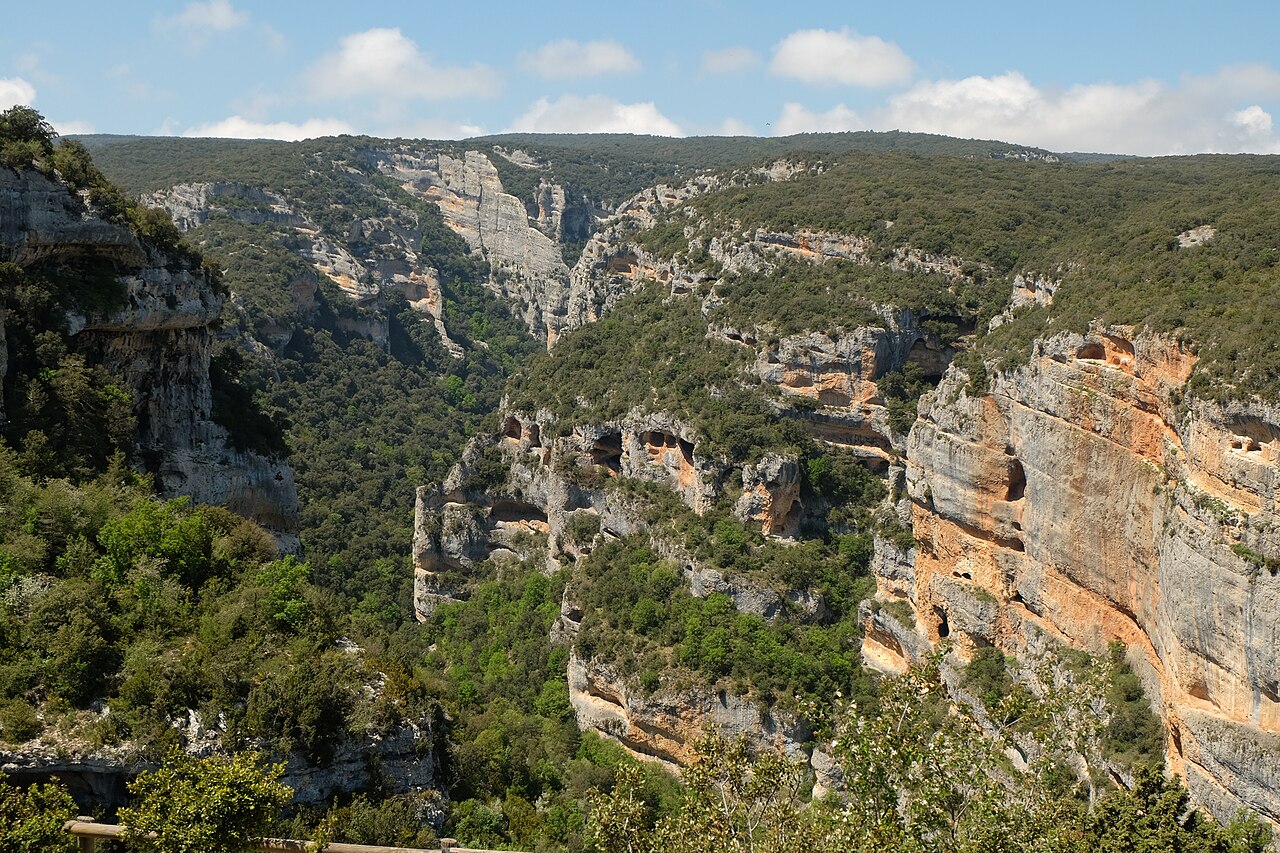
Drive north from Huesca into the foothills of the Pyrenees and the landscape turns arid, pale and improbably sculpted. This is the Sierra de Guara, and for canyoneers it is something close to a homeland: nowhere else in Europe packs so many quality descents into so small an area, with such reliable summer conditions. It is the place a great many Europeans serve their canyoning apprenticeship, and the place many of them keep coming back to for the rest of their lives in the sport.
Why here
Three things made Guara the capital. The limestone is deeply and intricately carved, producing slot canyons of rare beauty. The Mediterranean climate gives warm, dependable water through the summer when alpine canyons are still cold and high. And decades of exploration have left an exhaustive catalogue of documented routes, from gentle family descents to serious test-pieces.
There is a cultural reason too. Guara was one of the cradles of the modern sport in the 1980s, and an entire local economy grew up around it — guiding companies, gear hire, campsites and refuges all tuned to canyoneers. That maturity is part of what makes it so welcoming to a first trip: the infrastructure that took other regions decades to build is simply already here, woven into villages that have been hosting descents for a generation.
Basing yourself in Alquézar
The honey-stone village of Alquézar, perched above the Vero river, is the natural hub. Within a short drive you can reach dozens of canyons, hire gear, find a guide, and eat well after a long day underground. Nearby Rodellar serves the northern canyons and doubles as a world-class climbing village.
Alquézar also gives a trip its rhythm. Mornings start early to beat both the heat and the crowds on the popular routes; afternoons drift into the long Spanish evening, with the day's grit washed off and the next canyon argued over a map and a drink. The village itself, with its medieval collegiate church above the gorge, is reason enough to linger a day when legs need a rest from rock.
Routes for every level
- Lower Mascún — a scenic, mostly-walking introduction to the scale of Guara.
- Peonera — a sporty classic of jumps, slides and warm pools.
- Barrasil and the Vero canyons — atmospheric corridors with a real expedition feel.
- Gorgas Negras and the northern slots — committing routes for experienced parties.
The genius of Guara for a learning canyoneer is this spread. You can spend a first day almost dry, wading the lower reaches of a canyon to get used to the scale, then step up day by day through jumps, longer swims and bigger rappels without ever leaving the massif. Few regions let a party calibrate so precisely, which is exactly why so many guides bring beginners here.
Note. Many Guara canyons cross protected areas and private land, and some have seasonal restrictions to protect nesting birds of prey. Read current local regulations before each descent.
Making the trip work
Go between June and September for reliable water and warmth. Expect heat on the approaches — carry more water than feels necessary — and plan car shuttles, since many routes finish far from where they start. A week here, building from easy to harder canyons, is one of the great introductions to the sport.
A few practical notes save trouble. The approaches are exposed and genuinely hot, so the day's biggest risk is often dehydration on the walk in rather than anything in the water; start early and carry electrolytes. Mobile coverage in the deeper canyons is non-existent, so leave a plan with someone. And because the region is so popular, the famous canyons can be busy on summer weekends — going midweek, or choosing a quieter parallel route, gives you the slot to yourself and is gentler on canyons that carry a heavy season of traffic.
Guide or independent?
Guara works equally well as a guided trip or a self-organised one, and which you choose should depend on honest experience rather than budget. For a first canyoning holiday, a few days with a local guide buys far more than safety: they read the day's water and weather for you, pick routes matched to how your group is actually moving, and quietly teach the regional quirks — which approaches bake in the sun, which canyons need a shuttle, where the awkward down-climbs hide. Many visitors do two or three guided days to learn the area, then continue independently on the easier classics once they have a feel for it.
If you go independent, treat the topo as gospel and the conditions as the final word. Buy a current local guidebook, cross-check it against recent online trip reports, and never assume a canyon is in condition just because the sky is blue over Alquézar — the storms that matter may be sitting over the high ground to the north. Sort your car shuttles before you start, agree turn-around times, and build your week from the gentle valley canyons up to the committing northern slots rather than the other way around. The region's depth is its gift: there is always an easier route to fall back on when a group is tired or the water is up.