Guide / Safety
SafetyJumping into pools, safely
Jumps are the most photogenic part of canyoning and the easiest way to get hurt. How to take them with judgement, not bravado.
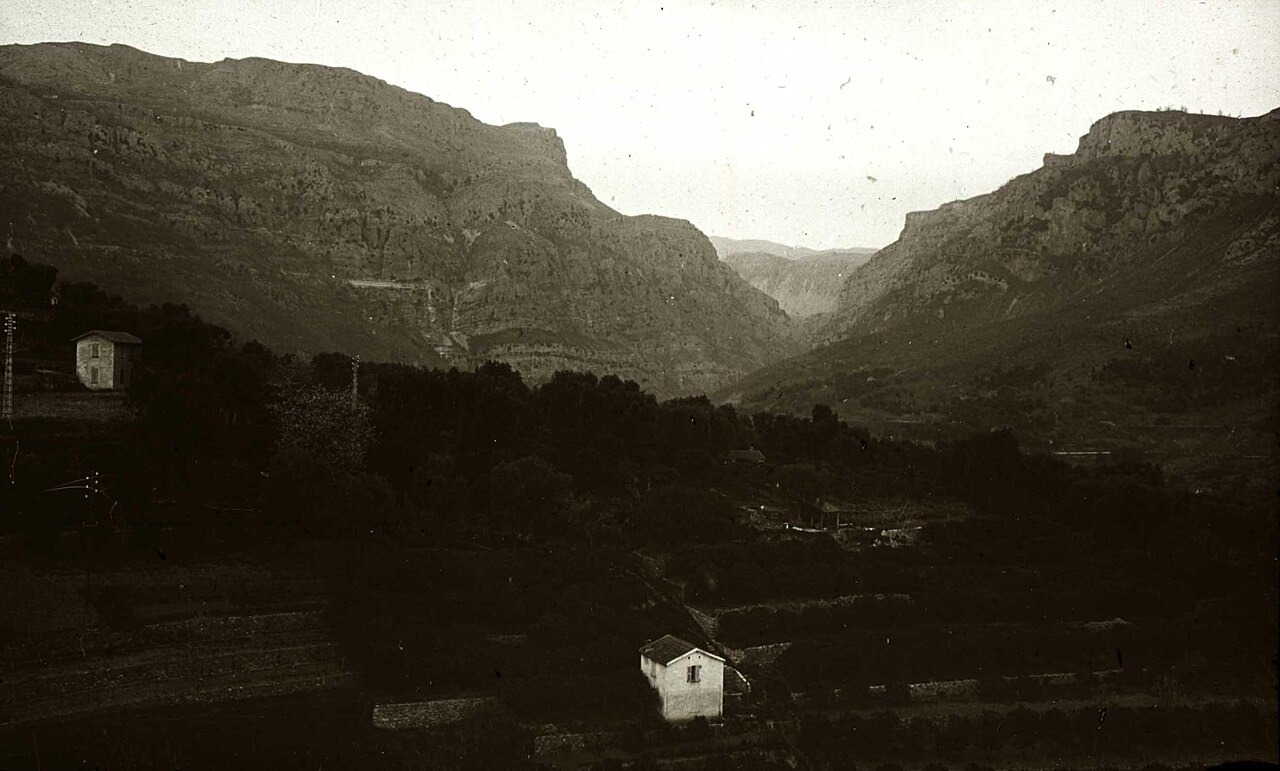
Photo: Emmanuel de Martonne · Licence Ouverte, Wikimedia Commons
Guide / Safety
SafetyJumps are the most photogenic part of canyoning and the easiest way to get hurt. How to take them with judgement, not bravado.
Photo: Emmanuel de Martonne · Licence Ouverte, Wikimedia Commons
Nothing sells a canyoning photo like an airborne silhouette over a turquoise pool. And nothing sends canyoneers to hospital more reliably than a jump taken without checking what is underneath. Jumping is optional on almost every canyon; treating it as optional, every single time, is the mark of an experienced descender.
It helps to be honest about why jumps are dangerous out of proportion to how they feel. They are brief, exhilarating and social — exactly the conditions under which people switch off their judgement and follow the person in front of them. The injuries that result are rarely dramatic falls; they are the routine ones, a heel slammed into a hidden ledge or a back compressed on a shallow landing, picked up on jumps that looked completely benign.
Water hides everything. A pool that looks deep and clear can conceal a submerged boulder, a shelf, a log jammed since the last flood, or simply a bottom much closer than it appears. The rule is absolute: no one jumps into water they have not personally seen checked, by someone who has entered and confirmed the depth and the landing zone is clear.
The person who checks the pool is doing real work, not a formality. They climb or rappel down, swim the landing zone feeling for the bottom and any obstacle, gauge how deep the safe area really is and how big it is, and then guide each jumper to the exact line that lands clear. Treat that person's call as final. 'It looked fine from up here' is the sentence that precedes a great many canyon injuries.
Jump feet-first, body vertical and slightly tucked, arms crossed over your chest or holding your knees — never a dive, never a backflip into an unknown pool. Keep the height modest: even into deep water, big jumps load the spine and legs hard, and awkward entries cause injuries on their own. The goal is a clean, controlled feet-first entry, every time.
Commit to the jump once you have decided to take it. Hesitating at the lip, half-stepping, or pushing off weakly is how people clip the edge or rotate in the air and land flat. Take a positive step out to clear the rock below, keep your eyes on the horizon rather than the water rushing up, and let your legs absorb the entry. If any part of you does not want to commit, that is information — take the rope instead, with no loss of face.
Cold water, fatigue and pressure from a group are the conditions under which people make bad jumping decisions. If the team is tired, the water is moving, the depth is uncertain, or someone simply does not want to — the answer is the rope. There is no obstacle in canyoning that must be jumped, and a great deal to be said for the quiet confidence of walking past one.
Be especially wary of the social trap. A jump becomes far more dangerous the moment it turns into a dare, a queue of impatient people, or a thing you do because everyone else did. The strongest members of a party are the ones who can say, easily and without drama, 'I'll take the down-climb on this one' — because they make it normal for everyone else to make the same safe choice.
It surprises newcomers that the injuries are rarely from the big, dramatic leaps. Most come from modest jumps of a few metres into water that turned out to be a little too shallow, or onto a hidden ledge a swimmer's check would have found. Water is deceptive: refraction makes a pool look deeper than it is, dark water hides its bottom entirely, and a flat, glassy surface tells you nothing about the boulder a metre below it. Entering feet-first into water that is even slightly too shallow drives the impact straight up through your heels, ankles, knees and spine — which is exactly where canyoning's jumping injuries cluster.
There is also the slide, the jump's quieter cousin. Natural rock chutes are some of the best fun in the sport, but they deserve the same scrutiny: check the run-out pool, look for rock lips or shallow shelves at the bottom, and go feet-first and in control rather than head-first or spinning. Polished limestone can be faster than it looks, and a slide that launches you off the end into an unchecked pool carries every risk of a jump with less warning. Treat slides and jumps as the same decision — inspect, commit, and skip it without a second thought if anything is uncertain.