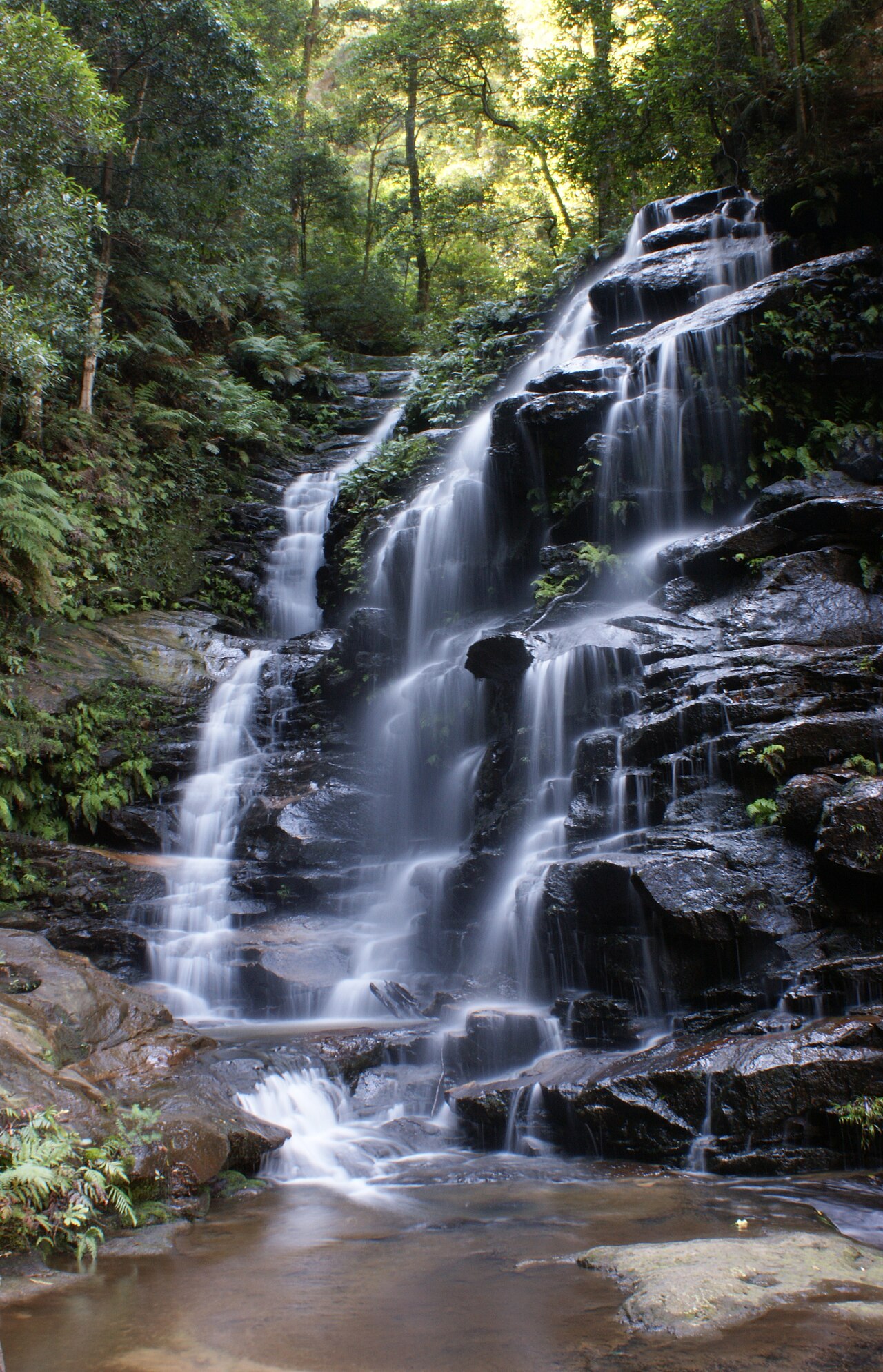
Two hours west of Sydney, the land rises into a maze of sandstone plateaus split by hundreds of narrow, fern-draped slots. The Blue Mountains are one of the world's great canyoning regions — and the place where the sport developed a character distinct from its European cousin.
The setting is a vast, dissected sandstone tableland, much of it within the Greater Blue Mountains World Heritage Area. Rivers have spent millions of years cutting down through the soft rock to carve slots that can be metres wide and tens of metres deep, lined with ferns and dripping with seeps. It is a landscape that rewards exploration: there are more canyons here than most people could descend in a lifetime, and new ones are still being found and recorded.
A different kind of canyon
Where European canyoning is often loud, vertical and full of moving water, the classic Blue Mountains canyon is quieter and more atmospheric: cool, dark, fern-lined slots with relatively little flow, where the experience is as much about the otherworldly light and the sculpted sandstone as about the obstacles. Many are 'dry' enough to need only a couple of abseils and a lot of swimming and walking.
The result is a style that feels closer to wilderness travel than to sport. A typical day involves a long bushwalk across the plateau to find the canyon's entrance, a few hours threading the slot itself, and a walk out the far side — navigation, self-reliance and route-finding matter as much as rope skill. The reward is the light: shafts of sun filtering between walls a few metres apart, glow-worms in the darkest sections, and the deep green of ferns that grow nowhere else but these cool, shaded corridors.
Classics for every level
- Twister and Rocky Creek — a friendly, fern-filled introduction.
- Empress Falls — a short, sporty route with a famous waterfall abseil.
- Claustral — a committing, atmospheric classic for experienced parties.
- Wollangambe — a relaxed, float-and-swim canyon popular for a first taste.
The range is wide. Something like the Wollangambe is gentle enough to be done as a long, scenic swim with minimal rope work, while Claustral — with its dark 'Black Hole of Calcutta' section and series of abseils — is a serious undertaking that demands experience, navigation and a cool head. Between them sit dozens of routes that let a competent party step up gradually, much as Guara does in Europe but in an utterly different landscape.
Note. Blue Mountains canyons are cold and many are committing. Several have sensitive fern and glow-worm ecosystems — leave-no-trace ethics are taken very seriously here.
Season and style
The canyoning season runs through the warmer months, roughly November to March, though the water stays cold year-round and a wetsuit is essential. The local tradition leans toward small, self-reliant bushwalking-style parties who navigate to remote canyons on foot. It is a wonderful place to experience canyoning as quiet wilderness travel rather than adrenaline sport.
A few local realities shape any trip. The cold is real — sandstone slots hold very little sun, and hypothermia, not the abseils, is the main hazard on a long Blue Mountains canyon. Weather can change fast on the exposed plateau, and the same flash-flood discipline applies as anywhere. Many of the best canyons sit on conservation land with access conditions and seasonal sensitivities, so going with a local club or guide on a first visit is by far the best way to learn both the canyons and the etiquette that keeps them open.
Navigation is half the skill
What catches European canyoneers off guard here is how much of the day happens outside the canyon. There is often no marked path: you navigate across trackless plateau, locate an inconspicuous slot in a sea of similar gullies, descend it, and then find your way out and back — sometimes hours of bushwalking bracketing a relatively short canyon. Map, compass and the judgement to use them are not optional extras; getting lost on the plateau, with afternoon weather building, is a more common way to get into trouble than anything the slot itself presents.
All of which is why the Blue Mountains reward humility and good company. The local bushwalking and canyoning clubs hold generations of knowledge about which canyons suit which conditions, where the awkward navigation lies, and how to tread lightly in slots whose ferns and glow-worms are genuinely fragile. A newcomer who turns up wanting to learn, rather than tick the famous classics as fast as possible, will find an unusually deep and welcoming culture — and will come away understanding why so many who descend these canyons describe them less as a sport than as a way of moving quietly through wild country.